« Cet artiste belge nous invite à percer deux visions de son œuvre reliées par un discours identique, à savoir l'empreinte laissée en nous par le temps qui passe, en laissant un dialogue à l'intérieur de la matière, telle une offrande sacrée, mystique... »
Les « autels » sont ceux de la mémoire, sortis d'un passé, en l'occurrence archéologique, puisque la première série des tableaux exposés a été créée à partir du souvenir de photos aériennes de sites archéologiques proche-orientaux.
Réalisées à l'acrylique, ces œuvres exposent une vision en plongée fortement stylisée (aérienne), de tumuli, enfermés au centre d'un halo lumineux, lequel met en exergue le mysticisme provenant du passé devenant par l'impact de la représentation plastique, intemporel.
« Deze Belgische kunstenaar nodigt ons uit om twee visies van zijn werk te doorgronden die met elkaar verbonden zijn door een identiek discours, namelijk de voetafdruk die de tijd in ons achterlaat, door een dialoog in de materie achter te laten, als een heilige, mystieke offergave... »
De "altaren" zijn die van de herinnering, afkomstig uit een verleden, in dit geval een archeologisch verleden, aangezien de eerste reeks tentoongestelde schilderijen is ontstaan vanuit de herinnering aan luchtfoto's van archeologische vindplaatsen in het Nabije Oosten.
Gemaakt met acrylverf, tonen deze werken een sterk gestileerd vogelperspectief (vanuit de lucht) van grafheuvels (tumuli), ingesloten in het midden van een lichtkrans, die de mystiek uit het verleden benadrukt en door de impact van de plastische weergave tijdloos wordt.
« This Belgian artist invites us to pierce two visions of his work connected by an identical discourse, namely the imprint left in us by passing time, leaving a dialogue within the matter, like a sacred, mystical offering... »
The "altars" are those of memory, drawn from a past, in this case archaeological, since the first series of exhibited paintings was created from the memory of aerial photos of Middle Eastern archaeological sites.
Created in acrylic, these works expose a highly stylized top-down (aerial) vision of tumuli, enclosed in the center of a luminous halo, which highlights the mysticism from the past becoming timeless through the impact of the plastic representation.
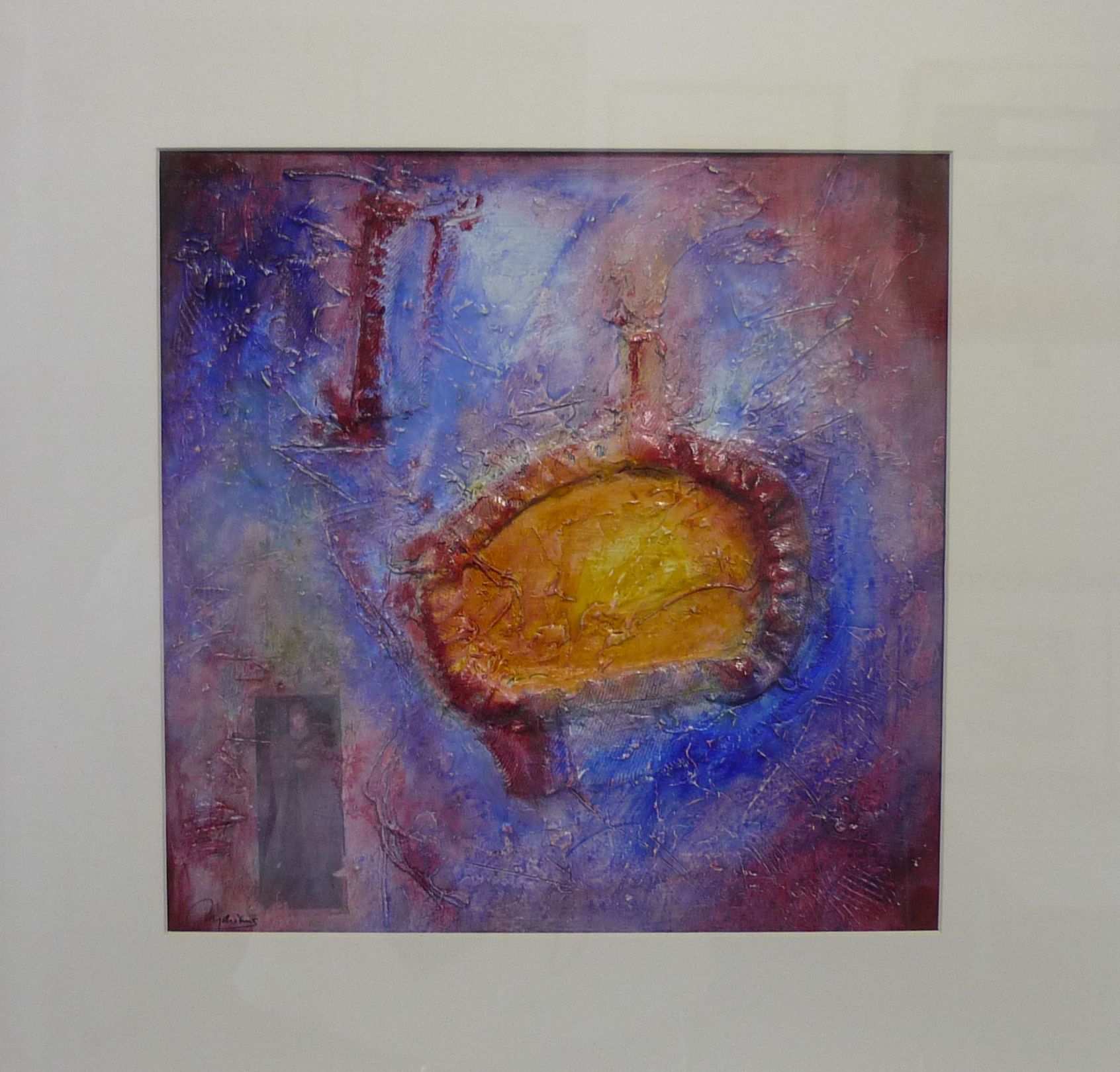
"Le tumulus enserré dans une sorte d'enceinte, un kremlin dont le trait ressort pour en souligner le volume." Compositie Nr. 2 (52 x 52 cm)
"De grafheuvel omsloten in een soort omheining, een kremlin waarvan de lijn opvalt om het volume te benadrukken." Composition No. 2 (52 x 52 cm)
"The tumulus enclosed in a sort of enclosure, a kremlin whose line stands out to emphasize its volume."
Ensuite, il nous propose le vestige enveloppé d'une masse de poussière séculaire réalisée au ciment et à l'acrylique, présentant un tout compact, pétrifié, indéfinissable, comme figé par la patine du temps. L'idée d'intituler son œuvre Let The Altars Shine lui est venue en écoutant le titre éponyme du groupe mythique des années '70 Meat Loaf.
Vervolgens stelt hij ons het overblijfsel voor, omhuld door een massa eeuwenoud stof gemaakt met cement en acryl, dat een compact, versteend, ondefinieerbaar geheel vormt, als bevroren door het patina van de tijd. Het idee om zijn werk Let The Altars Shine te noemen kwam in hem op toen hij luisterde naar het gelijknamige nummer van de mythische jaren '70 band Meat Loaf.
Next, he offers us the vestige wrapped in a mass of centuries-old dust made with cement and acrylic, presenting a compact, petrified, indefinable whole, as if frozen by the patina of time. The idea of titling his work Let The Altars Shine came to him while listening to the eponymous track by the mythical '70s band Meat Loaf.
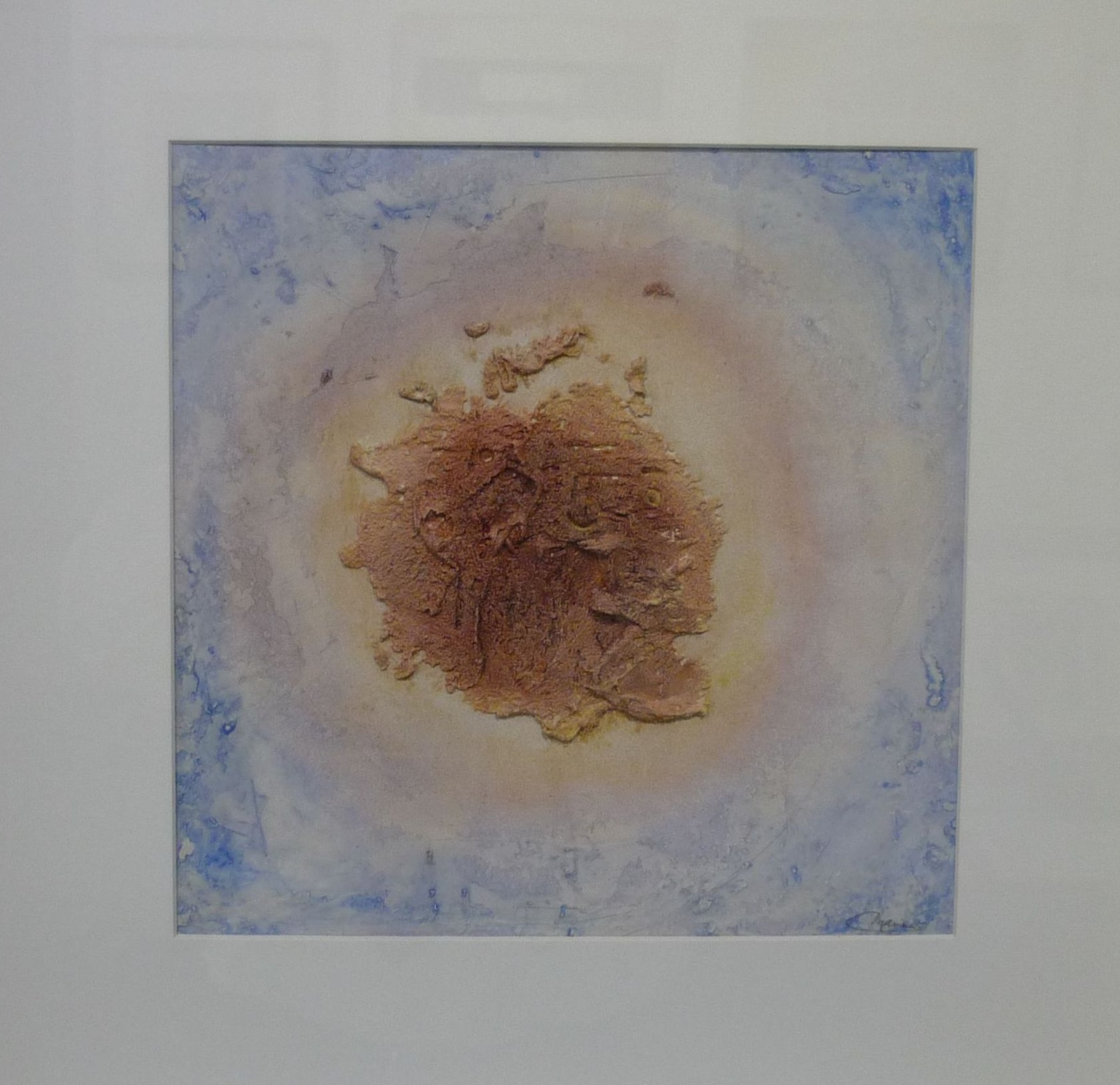
Masse de poussière séculaire, ciment et acrylique. Compositie Nr. 4 (52 x 52 cm)
Massa van eeuwenoud stof, cement en acryl. Composition No. 4 (52 x 52 cm)
Mass of centuries-old dust, cement and acrylic.
La mémoire voilée De gesluierde herinnering The veiled memory
La seconde série de tableaux peints par Michel Marinus est centrée sur le thème de la photographie ancienne que le temps a voilée. Une série de compositions dont il manque des morceaux. Ces morceaux sont ceux d'un puzzle qui se désagrège sur sa périphérie mais dont le centre est occupé par l'image floue, néanmoins vivante.
Ne fût-ce que par l'intemporalité de l'amour qui unit le couple portraituré, le faisant triompher de la mort et du temps. Nous assistons ici à la superposition de la peinture sur la photographie dans le but de retrouver, en quelque sorte, l'origine même de celle-ci, en recréant la patine temporelle propre au daguerréotype.
De tweede reeks schilderijen van Michel Marinus concentreert zich op het thema van de oude foto die door de tijd gesluierd is. Een reeks composities waaraan stukken ontbreken. Deze stukken zijn die van een puzzel die aan de randen uit elkaar valt, maar waarvan het centrum wordt ingenomen door het wazige, maar toch levendige beeld.
Al was het maar door de tijdloosheid van de liefde die het geportretteerde paar verenigt, waardoor het over de dood en de tijd triomfeert. We zijn hier getuige van de superpositie van schilderkunst op fotografie met als doel de ware oorsprong ervan terug te vinden, door het specifieke temporele patina van de daguerreotypie na te bootsen.
The second series of paintings by Michel Marinus centers on the theme of the old photograph veiled by time. A series of compositions with missing pieces. These pieces belong to a puzzle disintegrating on its periphery but whose center is occupied by the blurry, yet living image.
If only through the timelessness of the love uniting the portrayed couple, making it triumph over death and time. Here we witness the superimposition of painting over photography with the aim of rediscovering, in a way, its very origin, recreating the temporal patina specific to the daguerreotype.
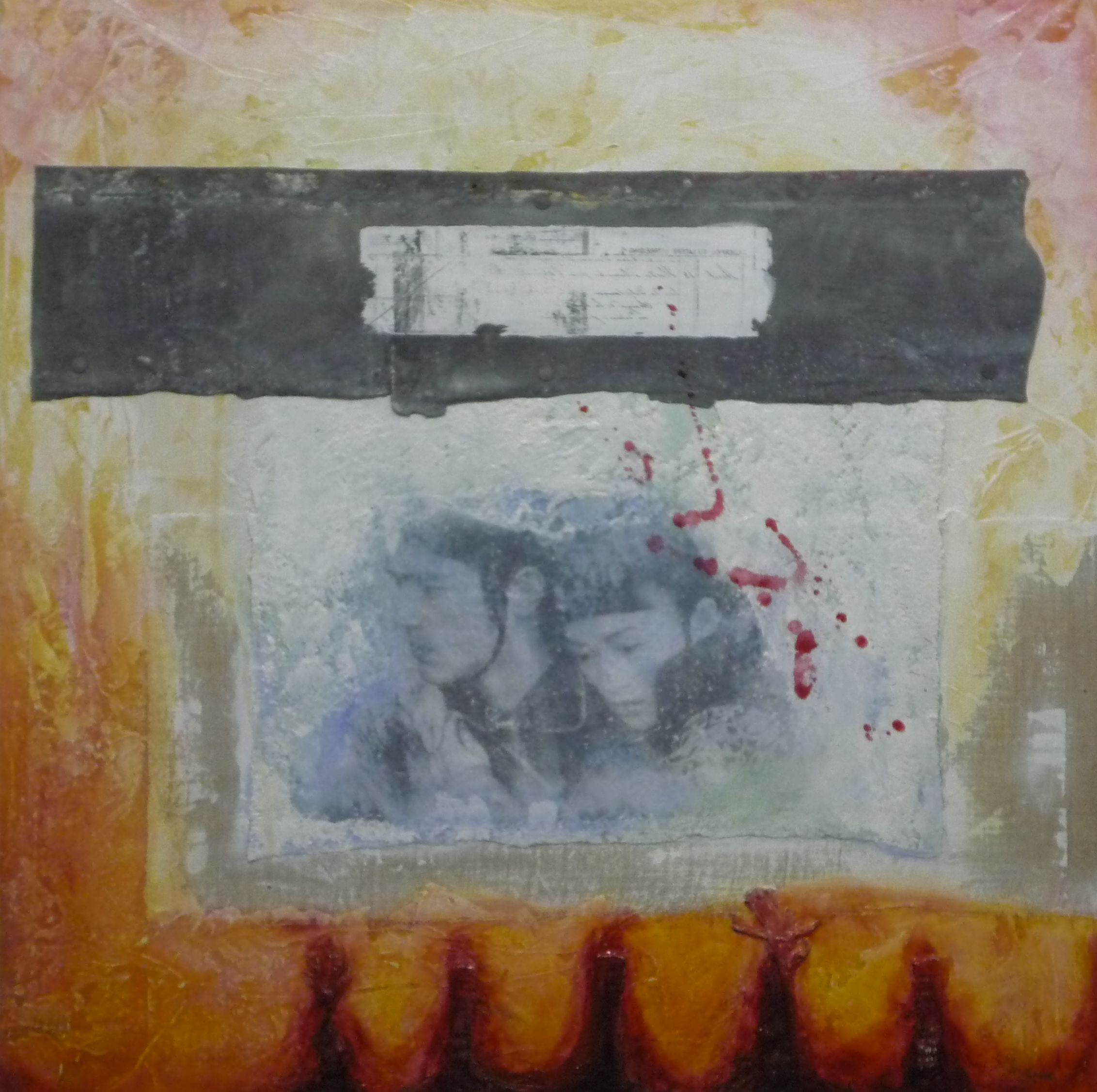
"L'humain confronté au passé magnifié par la beauté qu'il exhale." Schilderij Nr. 15 (61 x 61 cm)
"De mens geconfronteerd met het verleden, uitvergroot door de schoonheid die het uitstraalt." Painting No. 15 (61 x 61 cm)
"The human confronted with the past magnified by the beauty it exhales."
C'est essentiellement cela qui tient lieu de ciment aux œuvres créées. Comment décrire le temps qui passe ? Faut-il laisser flétrir l' « autel », l'abandonner à sa propre finitude ?
Temps et Art peuvent-ils chanter à l'unisson ? Ils le peuvent, néanmoins, l'un ne sera jamais au diapason avec l'autre. Ils ne peuvent être qu'en décalage car le rôle vital de l'Art est celui de saisir le temps au moment où le pinceau amorce le geste et le restitue sur la toile de l'intemporalité. C'est en cela que le couple, pris dans l'instant de l'amour sur la toile défunte, ressuscite à la vie.
Dit is in wezen wat fungeert als cement voor de gecreëerde werken. Hoe beschrijf je de tijd die voorbijgaat? Moeten we het "altaar" laten verwelken, het overlaten aan zijn eigen eindigheid?
Kunnen Tijd en Kunst in harmonie zingen? Ze kunnen het, maar toch zal de één nooit op dezelfde golflengte zitten als de ander. Ze kunnen alleen maar uit de pas lopen, want de vitale rol van de Kunst is de tijd te grijpen op het moment dat het penseel de beweging inzet en deze weergeeft op het doek van de tijdloosheid. Hierdoor herrijst het paar, gevangen in het moment van liefde op het dode doek, weer tot leven.
This is essentially what acts as cement for the created works. How to describe the passing of time? Should we let the "altar" wither, abandoning it to its own finitude?
Can Time and Art sing in unison? They can, yet one will never be in tune with the other. They can only be out of step because the vital role of Art is to seize time at the moment the brush initiates the gesture and renders it onto the canvas of timelessness. It is in this that the couple, caught in the moment of love on the defunct canvas, resurrects to life.
Historien de l'art — "Arts et Lettres" Kunsthistoricus — "Arts et Lettres" Art Historian — "Arts et Lettres" Lire l'article original sur Arts & Lettres → Lees het originele artikel op Arts & Lettres → Read original article on Arts & Lettres →
Voir l'article original dans Les billets d’art de François Speranza
(PDF - Page 13) Bekijk het originele artikel in Les billets d’art de François Speranza
(PDF - Pagina 13) View the original article in Les billets d’art by François Speranza
(PDF - Page 13)